
AC Not Cooling in Englewood: What We Actually Find

Repair October 2026
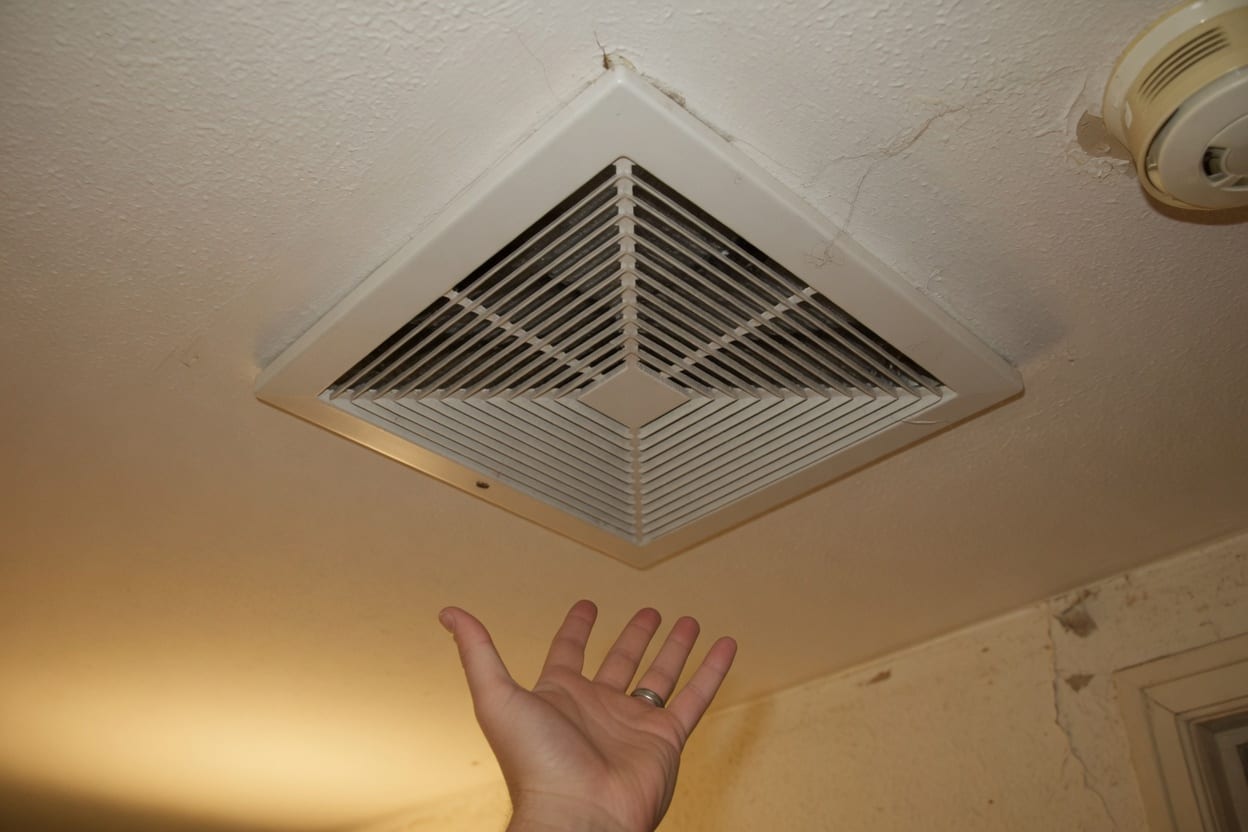
Hand checking airflow at a supply register while the air conditioner runs

The system is on. The outdoor unit is making noise. The air at the register is barely cooler than the hallway. That is the July call in Englewood, and it is a different failure from a system that will not start at all.

Four causes account for most of these visits. They feel the same from the couch.

The capacitor quit

The capacitor is the small part that kicks the compressor and the fan motor into motion. Salt and a long cooling season wear it out. You hear a hum or a click at the condenser, then the fan sits still or the compressor never joins in. Inside, the air goes warm because nothing is moving heat.

Leave it off. Pushing the fan blade with a stick to “help it start” can spin the motor for a minute and then take the compressor with it. A meter tells us whether the capacitor is out of range or the compressor itself is done.

The charge is low

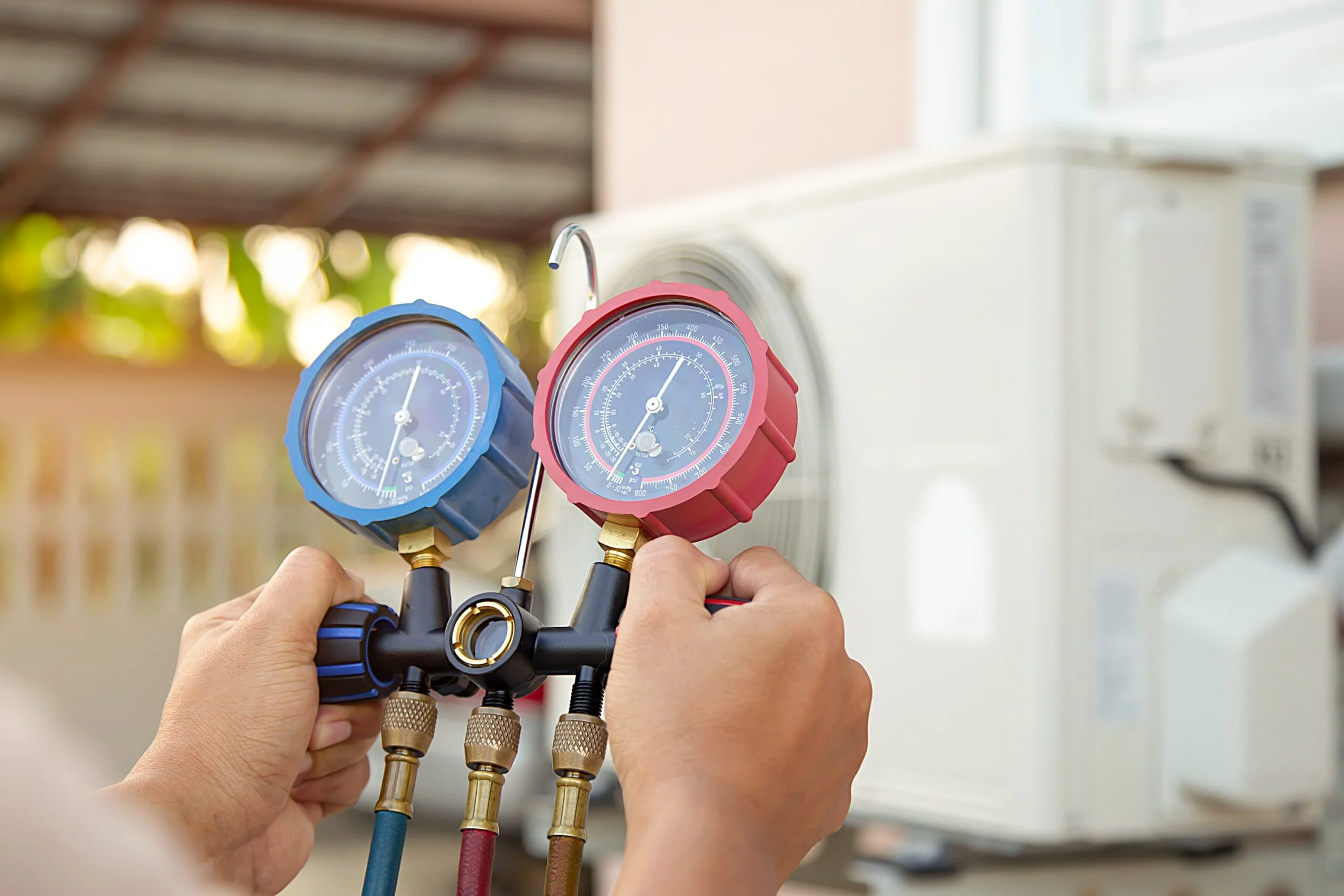
Warm air, ice on the copper lines, or a hiss at the outdoor unit point at refrigerant that is no longer at the level on the nameplate. Refrigerant does not get “used up.” If it is low, it left through a leak. On this coast the leak is often the coil, where salt has pitted the tubing.

We measure the pressure. We do not add a hardware-store can and hope. A top-off without finding the leak is a repair that lasts until the next hot week.

Air cannot get through

A filter that has not been changed, an evaporator packed with dust, or a supply duct that came loose in the attic all starve the coil. The system runs long, the house stays warm, and the coil may freeze. Ice is the clue. Turn the system off and let it thaw before anyone adds refrigerant to a frozen coil. The charge is often fine. The air path is not.

The drain shut it down

Cooling pulls water out of the air, and that water leaves through a small line that grows algae here. When the line blocks, a float switch kills the cooling so the closet does not flood. The thermostat still says “on.” The house heats up. People replace thermostats for this.

Water near the air handler, or a system that runs a few minutes and quits, is this failure until we prove otherwise. Clear the line and the cooling comes back. Ignore it and the next call is a wet ceiling.

If the outdoor unit is humming and the house is warm, shut the system off and call. Repeated start attempts are what finishes a struggling compressor. We test the capacitor, the charge, the airflow, and the drain, in that order, and the price is in writing before a part goes in.

Related: AC repair in Englewood and emergency AC repair when the house cannot wait until morning.

FAQ

Frequently Asked Questions

The answers Southwest Florida homeowners ask us most often.

What is the $5,000 rule for AC?
Multiply the age of the system by the cost of the repair. If the result is over $5,000, replace it; if it is under, repair it. A 10-year-old system facing a $600 repair gives you 6,000, so that leans replace. It is a rough guide rather than a law, and on this coast it leans further toward replacement than it would inland, because salt exposure shortens equipment life here.
What is the 3-minute rule for air conditioners?
Wait at least three minutes before restarting an air conditioner after it shuts off. Restarting sooner can make the compressor try to start against high refrigerant pressure that has not equalized yet, which is hard on it and can trip the breaker. Most modern thermostats enforce the delay on their own.
What is the average lifespan of an AC unit in Florida?
Shorter than the manufacturer figure. Florida systems run close to year round, so a well-maintained inland unit commonly reaches 12 to 15 years. Within a few miles of the Gulf, where salt corrodes the outdoor coil and electrical components, 8 to 12 is more realistic without proactive corrosion care.
What does a typical AC repair cost?
The cost depends on what failed. Contact us to arrange an inspection and discuss the repair options.
Why is my AC running but not cooling?
The common causes are a dirty filter restricting airflow, low refrigerant from a leak, a failed capacitor stopping the outdoor fan, a frozen evaporator coil, or a clogged condensate drain shutting the system down on its float switch. If the house is at temperature but still feels damp, that is a different problem: usually an oversized system that short-cycles and never dehumidifies.
Do you offer emergency AC repair in Englewood?
Yes. True AC of Southwest Florida provides 24/7 emergency air conditioning service in Englewood and nearby communities. Call (941) 229-6946 any time.
How often should an AC be serviced?
Once a year is the floor. For homes within a few miles of the Gulf, including Manasota Key, Grove City, Placida, and much of Englewood, twice yearly is the better call. The difference is almost entirely about how often the condenser coil gets rinsed of the salt that corrodes it.
How quickly can a technician get to my home?
We serve Englewood, Rotonda West, Grove City, Placida, Port Charlotte, and nearby communities. Call to ask about the next available appointment.
What areas do you serve?
We serve Englewood, Rotonda West, Grove City, Placida, Manasota Key, Englewood Isles, South Gulf Cove, Cape Haze, Port Charlotte, North Port, Venice, Punta Gorda, Nokomis, and Sarasota, across Sarasota and Charlotte counties.

Find Us in Southwest Florida

Based in Englewood and dispatching across Sarasota and Charlotte counties, from Sarasota and Nokomis down through Venice, Rotonda West, Port Charlotte, and Punta Gorda.

The True family of companies

3,000+ Reviews Across the True Family

Real reviews for True Plumbers, True Builders, True Roofers and True Aluminum. True AC is the newest company in the family and works to the same standard.

Tap to call (941) 229-6946 Get a Quote →